
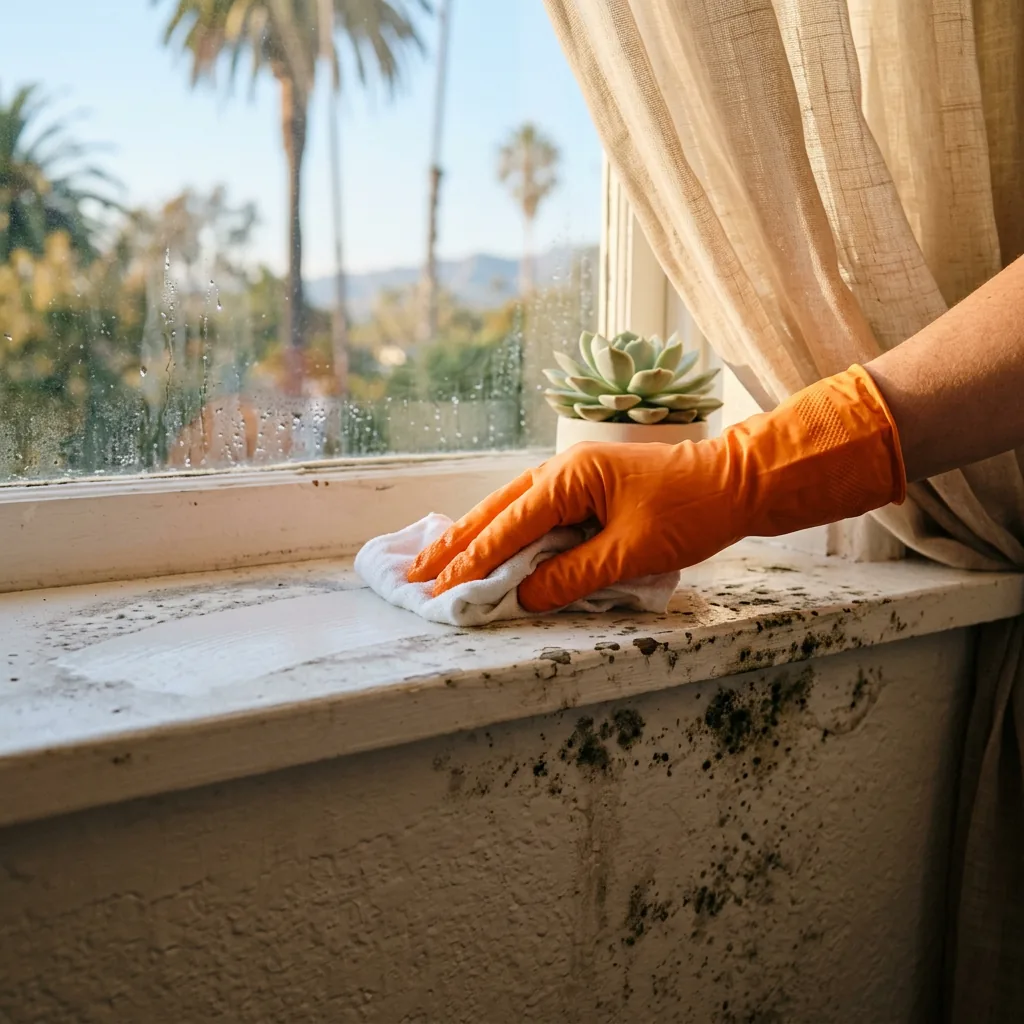
Mildew or mold? The appearance alone usually won’t tell you.
A spot that wipes away easily may be superficial growth, but that does not necessarily mean it is harmless “mildew.” And a dark or black-colored spot does not automatically mean you are dealing with a particular type of “black mold.”
In homes, the word mildew is often used casually to describe light, surface-level fungal growth, while mold is the broader term for fungal growth on building materials and household surfaces. Color, texture, and whether it wipes off are not reliable ways to determine what kind of mold is present or how significant the problem may be.
The more important question is why the area is damp. Mold growth requires moisture, and recurring growth can point to condensation, elevated humidity, a leak, or another hidden moisture source.
If you see visible growth, start by looking for the moisture source rather than trying to identify the mold by sight. On porous materials such as drywall, wood, or insulation, the extent of the problem may not be visible from the surface.
When the source is unclear, the growth keeps returning, or you suspect moisture inside walls or other materials, a professional mold inspection can help determine what is actually happening before you spend money on cleaning or remediation.
Quick Visual Cues (And Their Limits)
You may be able to tell that you’re looking at fungal growth, but appearance alone usually cannot tell you whether it is “mildew,” a particular type of mold, or how serious the underlying moisture problem is.
People often use the word mildew for light, superficial fungal growth on damp surfaces such as tile, grout, or window frames. “Black mold,” on the other hand, is a popular term for dark-colored mold, but many different molds can appear black, green, gray, brown, or even white.
Use these clues as a starting point, not a diagnosis:
- Appearance: Powdery, fuzzy, slimy, flat, or raised growth can all be mold. Color and texture are not reliable ways to identify the species.
- Wipe test: Whether growth wipes away does not tell you whether it is mildew or mold. Some surface mold wipes off easily; other growth may stain or return if the moisture problem remains.
- Moisture: Any recurring fungal growth is a sign to look for moisture. Common causes include condensation, high humidity, plumbing leaks, roof leaks, or water intrusion.
- Smell: A musty or earthy odor can suggest damp materials or microbial growth, but smell alone cannot identify the type or location of mold.
- Common locations: Mold can grow on tile, window frames, drywall, wood, insulation, carpet, and other materials when moisture is present.
- What to do next: Small amounts of superficial growth on cleanable surfaces may be addressed by cleaning and correcting the moisture source. Recurring growth, larger areas, hidden moisture, or growth on porous building materials may warrant a professional inspection and moisture assessment.
What Mildew Usually Means
“Mildew” is a common term for light, surface-level fungal growth that often appears in humid areas such as shower tile, window frames, and laundry rooms.
It is usually associated with surface moisture, condensation, or poor ventilation, rather than a hidden problem inside a wall. The key is to correct the moisture source by improving ventilation, reducing humidity, and helping surfaces dry more quickly.
If the growth keeps returning, spreads onto porous materials, or appears alongside staining or water damage, it may be worth checking for a deeper moisture issue.
What “Black Mold” Can Mean
“Black mold” is a common phrase, but it isn’t a category we use in professional mold testing. Many different molds can appear black, green, gray, brown, or even white, so color alone tells you very little.
Instead, we focus on which mold types are actually present and what they may mean for exposure. Some molds are associated with mycotoxins or greater health concern, while others are more commonly associated with allergic or irritant responses.
Stachybotrys is one mold often called “black mold,” but it cannot be reliably identified by sight. Laboratory testing is the best way to determine what mold is present and how significant the finding may be.
7 Checks You Can Do in 5 Minutes
Use this quick checklist to decide whether you may be dealing with surface growth, a deeper moisture problem, or something that deserves professional testing.
Location.
Growth on tile, glass, or grout is often surface-level. Growth on drywall, wood, or other porous materials deserves a closer look.
Moisture.
Check for condensation, soft drywall, bubbling paint, damp flooring, staining, or slow plumbing leaks.
Spread pattern.
One shower corner is different from growth that follows baseboards, seams, or multiple areas.
Does it return?
If growth comes back after cleaning, the moisture source probably hasn’t been corrected.
Musty odor.
A persistent musty smell can be a clue that damp materials or microbial growth are present, even when you can’t see the source.
Health pattern.
Symptoms that consistently worsen in a particular indoor environment can be a reason to investigate indoor air quality, though symptoms alone can’t diagnose mold exposure.
Need certainty? Visual clues only go so far. When you need to know what mold is actually present, professional sampling and laboratory analysis can replace guesswork with data.
Mold Exposure Symptoms to Watch
A small spot can feel less important than how you feel at home.
Common mold exposure symptoms include:
- Cough, wheezing, or chest tightness.
- Sinus pressure, sore throat, runny nose.
- Itchy eyes.
- Headaches that fade outside.
- Fatigue or brain fog.
- Rashes or itching.
If these symptoms are confined to one room or worsen after you come home, they may point to indoor air quality. For a full breakdown, see 10 warning signs of mold toxicity.
These can look like the flu or allergies, with symptoms such as sneezing, itchy eyes, or chest tightness. Mold-related allergy reactions often track to one room and ease when you leave. Indoor mold exposure also tends to worsen over time.
The longer the moisture source stays active, the higher the spore concentrations that circulate through your air. That accumulation is why symptoms can feel manageable early on and noticeably worse a few months in. If symptoms show up after showering, doing laundry, or spending time in a basement, treat it as a ventilation and moisture issue until testing says otherwise. Symptoms can also flare from mold growth behind a wall, even when the stain looks small, so watch for patterns tied to one room or building.
When to Test vs When to Clean
You do not need lab work for every spot. Use these guidelines to decide whether you can clean and track it, or whether testing will save you time and bad guesses.
Clean and Monitor
- Small mildew in a well-ventilated shower.
- Wipes off, does not return after you fix the ventilation and drying.
Test Soon
- Visible growth on drywall, wood, or ceiling tile.
- A leak, flood, roof issue, or overflow in the last 12 months.
- A musty smell you cannot place. Our guide on why your house smells musty covers the most common hidden sources.
- Symptoms cluster in one room.
Working with a Santa Barbara mold inspector involves identifying the moisture source, sampling the air, and comparing results to outdoor baseline conditions. A house mold inspection covers the full building when symptoms are not limited to one room.
Why Independent Testing Matters Before (And After) Remediation
A good mold report does more than tell you whether mold is present. It gives you a clear, independent picture of the problem before anyone starts tearing things out.
Before remediation, testing and moisture assessment help identify where the problem is, how extensive it may be, and what moisture source is feeding it. That gives remediators a defined scope to price from, and lets you compare ‘apples-to-apples’ quotes, rather than relying on competing guesses.
Just as important, the testing company should be independent from the remediation company. That way, the person defining the problem is not the same person being paid to fix it.
After remediation, post-remediation verification testing provides an independent check that the work was completed properly and that conditions are appropriate before walls are closed or the space is put back together.
Think of it as a three-step process:
Test → Remediate → Verify
First, understand the problem. Then fix it. Then independently confirm that the cleanup was successful.
That is the safest way to avoid unnecessary work, incomplete remediation, and paying twice for the same problem.