

Clearance Testing.
Independent Post Remediation Verification.

Don't Assume It's Clean. Prove It.

Book Your Clearance Test

The Cleanup Isn't Finished Until It's Verified

The remediation crew has completed their work, but before the containment comes down and the project is signed off, there's one final step: independent clearance testing.

This is the moment to verify that the remediation achieved its goal. While the containment is still in place, we inspect the work, evaluate the conditions, and collect the samples needed to confirm that indoor mold levels have returned to an acceptable baseline. If additional cleaning or remediation is needed, it's far easier, and far less costly, to address it before the containment is removed and the crew leaves the site.

Post-remediation clearance isn't about questioning the contractor's work. It's about independently verifying the outcome before the project is considered complete. Once the containment comes down, everyone can move forward with confidence because the decision is based on evidence, not assumptions.
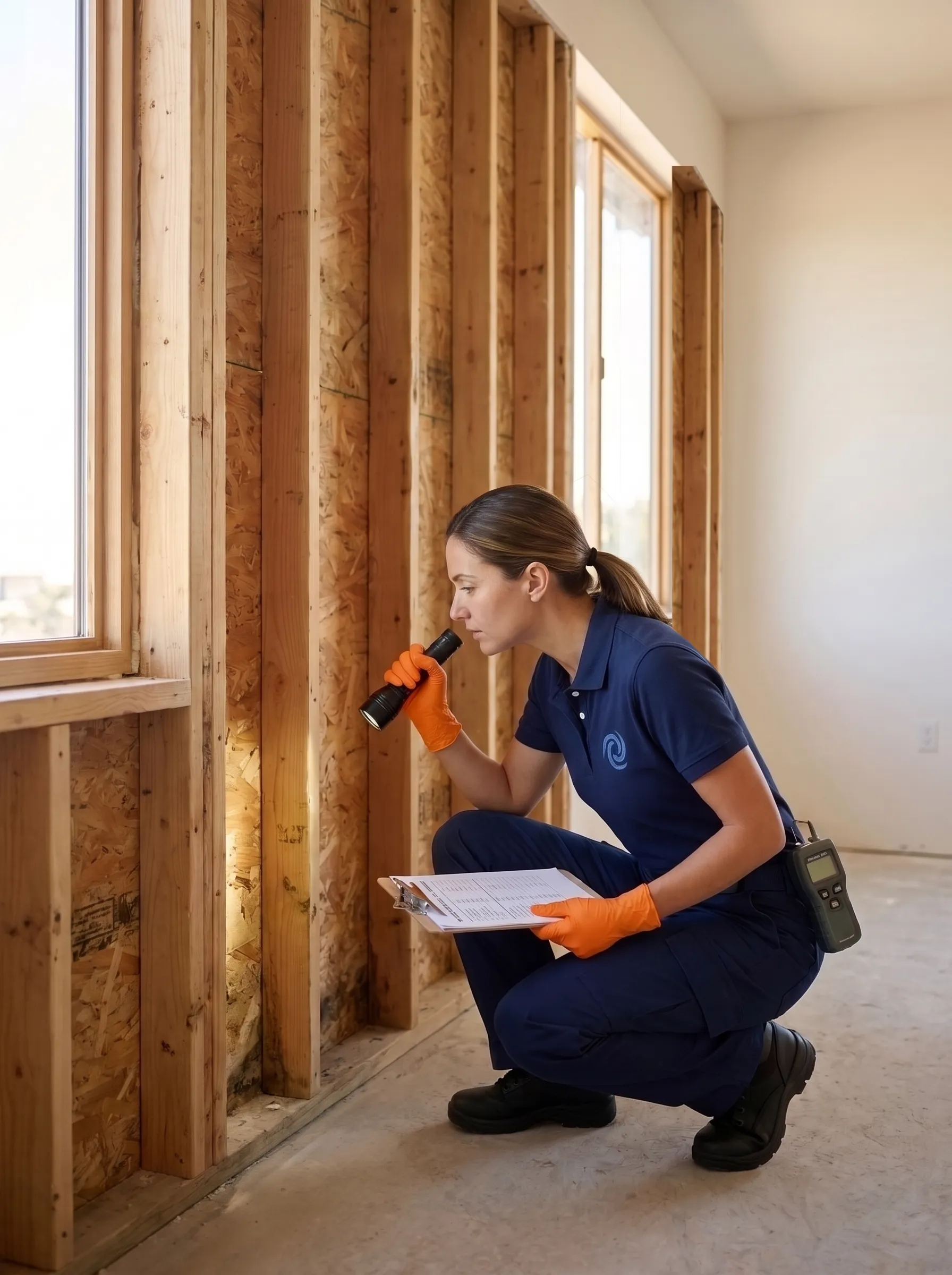
Inspector examining a wall cavity after mold remediation

Finished and Verified are Two Different Things

One means the remediation work is complete. The other means the results have been independently verified. Post-remediation clearance testing confirms that the work achieved its objective before containment is removed and the project is signed off. It replaces assumptions with evidence, giving you confidence that the indoor environment has been evaluated by an independent third party, not simply declared finished.
Why Verification Should Be Independent

In most cases, the company that removed the mold is the same one that certifies the work succeeded. They tore out the drywall, ran the mold remediation, and then graded their own results. Consider what that arrangement asks of them. A company that grades its own cleanup has a stake in the outcome. Its reputation and its final payment ride on a passing result, while the family that has to live there has no say in the grade.

We test, and we never remediate. Because no part of our business depends on the cleanup passing, our findings hold no commercial stake in the outcome. The clearance testing we deliver answers to the laboratory data, and to nothing else.

Independent verification, by design. Our report reflects one thing: what the laboratory measured. That figure holds the same weight whether it lands in front of you or your insurer.

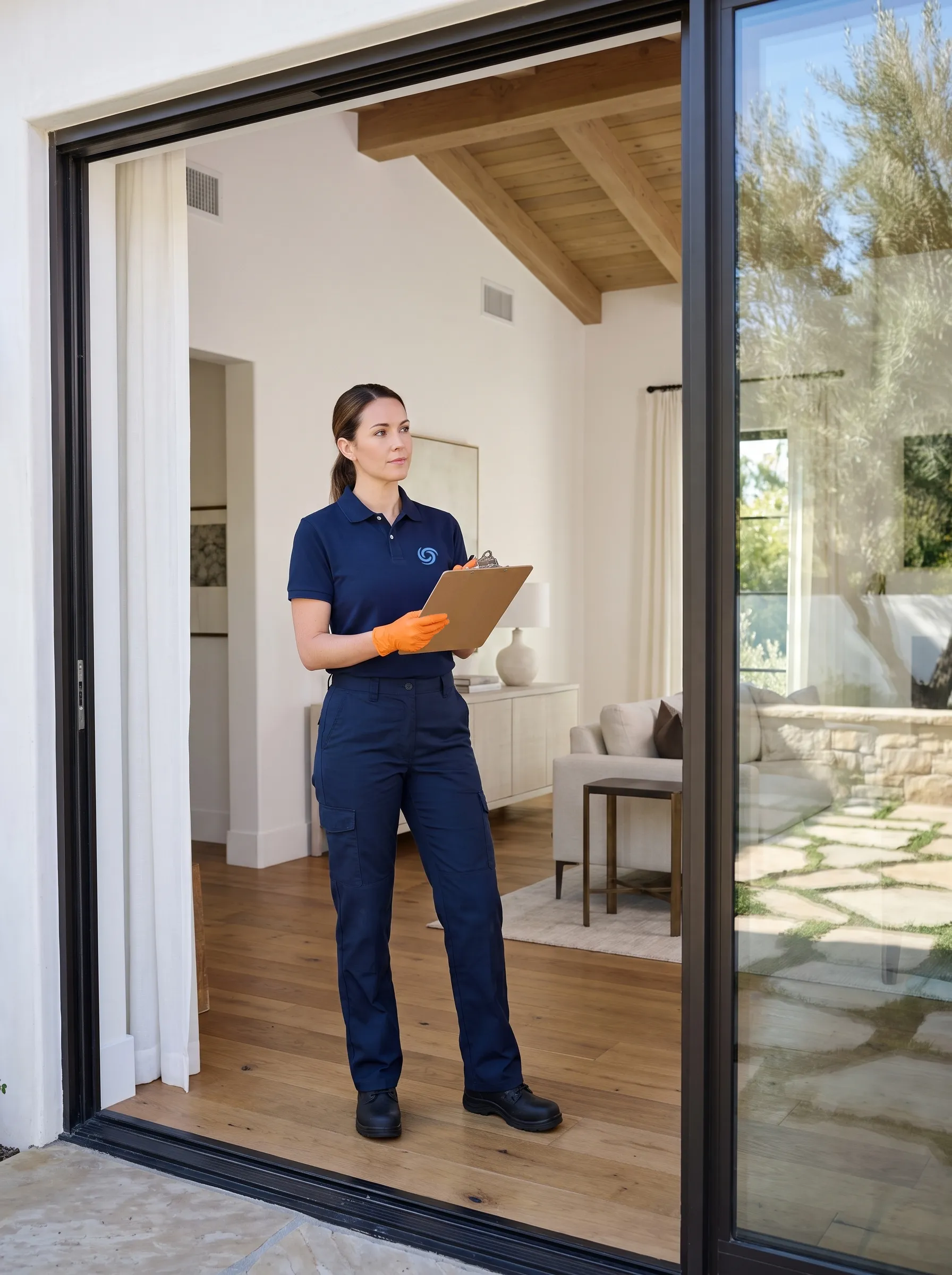
Inspector reviewing a clearance checklist at a doorway

The Bar a Finished Job Has to Clear

A room can look spotless and still hide what makes people sick. The people you love will breathe this air first, so post-remediation verification holds the work to four standards, and your home has to clear every one before we sign off.

Nothing left to see

A visual inspection of the containment for fresh mold growth and the fine residue a cleanup leaves on sills and trim. Every surface the family touches has to be clean and dry.

Air that matches the outdoors

Air sampling weighs the room against an outdoor control, confirming the indoor spore count has dropped back to a normal fungal ecology.

We hold every result to IICRC S520, the standard the mold remediation industry uses to define a job that worked. Passing all four is what lets you move the family back into that room and trust the air they breathe. For a wider read on the home beyond the cleared space, our professional indoor air quality testing covers the whole house.

How We Read a Finished Job

By the time you call us, you are tired of taking the cleanup on faith. So every clearance inspection runs in the same fixed order, the way a building examiner works down a list, and you can stand in the room for each step or read the post remediation testing back later in plain language.

1

Confirm the Scope

We start from the original mold inspection and your remediation plan. The verification covers the exact rooms the work was meant to fix, and nothing gets skipped.

2

Walk and Look

We walk the containment area room by room, checking framing, subfloor, and treated surfaces for visible mold or staining.

3

Sample Air

Air sampling indoors against an outdoor control, plus surface sampling where a spot calls for a closer look, each logged under a sealed chain of custody.

4

Accredited Lab Analysis

An accredited third-party lab identifies the mold species and counts, then checks them against the outdoor baseline IICRC S520 uses to confirm a clean result.

5

The Verdict

You get a clear pass or fail, and the clearance testing data that stands behind it. If the containment area meets clearance criteria, you have independent documentation that the project has been verified before containment is removed.

Pass or Fail, You Get the Truth

This is the moment the entire process has been leading to. Independent clearance testing brings certainty where there has been uncertainty. Whether the work meets the clearance criteria or identifies areas that need additional attention before containment comes down, you have clear answers, objective evidence, and a defined path forward. Either way, you're making decisions based on verified results instead of assumptions.

A clean clearance

When the laboratory results confirm the remediation was successful, you can move back into the space with confidence. The room is no longer defined by uncertainty, but by independent verification. You leave the worry behind because the decision is supported by evidence.

A failed clearance

If the clearance testing identifies remaining concerns, you find out before the containment comes down, before the project is signed off, and before final payment is released. That's exactly what independent post-remediation verification is designed to do.

Either outcome ends the guessing. Whether the clearance confirms the remediation was successful or identifies work that still needs attention, you'll have an independent answer grounded in the inspection and laboratory results. If elevated mold levels remain, you'll know before the containment comes down, giving the remediation contractor the opportunity to address the problem before the project is considered complete.

For many people, the results also answer a different question: whether the indoor environment may have been contributing to the symptoms that led them to investigate in the first place. That's where many homeowners begin asking a new question — how mold exposure causes fatigue.

When the Verdict Has to Convince Someone Else

Sometimes the clearance is for your own peace of mind, and that is enough. Other times the result has to hold up in front of someone who controls your money or your family's next move, and a remediator vouching for itself will not carry that weight.

Homeowners

Proof the home is safe before the family moves back into the room where the mold started, so no one carries that doubt inside.

Landlords and Tenants

Documented clearance inspection services that settle whether a unit is fit to live in, so neither side signs a lease on a worry.

Buyers and Sellers

An independent verification that keeps a sale from stalling over a mold repair no one else can vouch for, with both sides reading one report.

Property managers

Defensible documentation for owners and insurers, with no conflict of interest in the result and nothing for a lawyer to pick apart later.

For larger buildings that need a standing read on air quality after the work, our commercial air quality testing services run the same independent method.

Restore Peace of Mind

You've carried this since the day the water intrusion happened or the mold was discovered. The remediation was meant to bring the problem to an end. Independent clearance testing is what confirms whether it did.

One inspection. One objective evaluation. One set of laboratory results you can trust. That's how uncertainty gives way to confidence.

Tell us what was remediated and when. We'll perform an independent post-remediation clearance inspection to verify the work before the project is truly complete. If the remediation has met its objectives, you'll receive the documentation to confidently close the file. If additional work is needed, you'll know before the containment comes down, when it's easiest to make it right.

Book Your Clearance Test

Request an Estimate

Frequently Asked Questions

The cleanup removes the visible mold. Verification proves the air and surfaces are safe to breathe. Moisture can linger behind a wall and mold spores can settle back before anyone sees them, so a finished-looking job can still leave a household member waking up congested. Independent clearance testing confirms the mold remediation was successful.

A remediator clearing its own work has a stake in passing it. An independent clearance removes that conflict. Because we test and never remediate, no part of our result depends on the outcome, which is what makes the report hold up for you, an insurer, a landlord, or a buyer reading it months later.

A clearance that does not meet the remediation objectives means the inspection or laboratory findings indicate additional work is needed before the project is complete. We interpret the results using recognized industry guidance, including NORMI protocols, together with the inspection findings and comparison to the outdoor baseline. You'll receive clear documentation, which you can provide to your remediation contractor. Once the additional work is complete—and while the containment is still in place—we can return to perform follow-up clearance testing. Identifying remaining issues at this stage helps avoid closing out a project before it's truly ready.

The remediation contractor determines when their work is complete. Once they tell you the project is ready for clearance, schedule the verification before the containment is removed and while the work area is still isolated. Whenever possible, affected materials should also be dry and have returned to their normal moisture levels. Testing at this stage allows us to independently verify whether the remediation achieved its objectives. If additional cleaning or corrective work is needed, the contractor can address it immediately while the containment is still in place, avoiding the time and expense of reopening the work area later.

The remediation may have been completely successful, but without independent verification, you won't know for certain. If remaining contamination or unresolved moisture issues are discovered after the containment has been removed, addressing them can be more disruptive and expensive than correcting them while the work area is still contained. Post-remediation clearance testing provides independent confirmation that the remediation achieved its objectives. If additional work is needed, it's identified while the contractor can still make corrections efficiently, before the project is considered complete.