
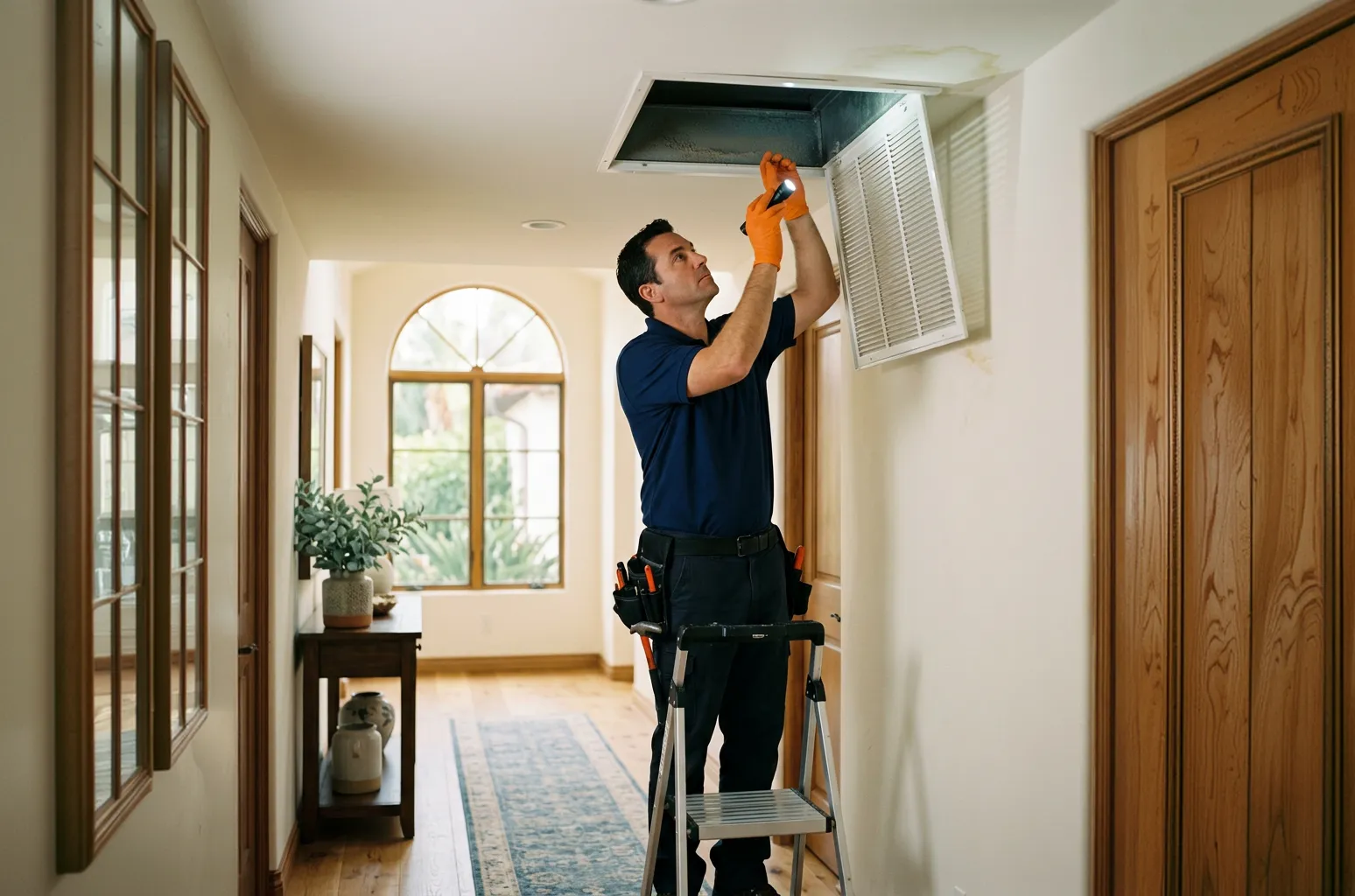
Dust on the vents, a headache the moment the AC kicks on, an odd smell that lingers in the hallway. Those are signals worth reading, and they often tell you more about your air than the calendar does.
How often your ducts need attention depends on what your system has lived through: pets, renovations, a hidden leak, a humid stretch that never dried out.
Start with an inspection that pairs photos of the duct interior with lab-tested air samples. You see the facts before anyone quotes the job, and the right schedule comes into focus.
This page covers the frequency of air duct cleaning, warning signs that call for earlier cleaning, and factors that affect indoor air quality at home.
Air Duct Cleaning Frequency: How Often and Why It Varies
How often air ducts should be cleaned depends on what your system has been through, not a fixed calendar date. Start with a baseline, then adjust for what your HVAC has been through.
What the National Air Duct Cleaners Association Recommends
NADCA, the trade body that sets duct cleaning standards, publishes a general range. The EPA stays flexible because the right timing depends on your home’s conditions.
Most homes have their air ducts cleaned every 3 to 5 years by a professional. Households with pets, smokers, or recurring allergy symptoms tend to land closer to every 2 to 3 years. Indoor air quality often improves when dust and debris are removed from the system, especially when dirty air ducts have been overloading your filters.
A practical check is what your home shows you. Dust puffing from registers or a fresh filter clogging fast is a signal to move the timeline up, even when the ducts look clean from the outside.
Consider cleaning sooner if any of these apply.
- A leak, flood, or HVAC moisture issue near the return side.
- A renovation in the last 6 months that produced drywall dust or sawdust.
- Visible mold inside the ducts or around supply vents.
- Moving into a home with pets, smokers, or a history of skipped HVAC upkeep.
- Allergy or asthma flares that spike when the system runs.
Has one of these happened in the past year? Book an inspection to confirm what is inside your ducts before agreeing to any cleaning scope.
Signs Your Air Ducts Need Cleaning
Air ducts give you signals. The trick is reading them right.
- Heavy discharge from the supply registers, dust puffs out when the blower kicks on, and getting the air ducts cleaned becomes the next right step.
- A musty smell that intensifies with airflow, the odor strengthens as soon as the system starts.
- Allergy flares are tied to the HVAC; symptoms ease when the unit is off and return when it cycles.
- Filters clogging in weeks, a fresh filter loads up long before its replacement date.
- Uneven temperatures between rooms, restricted airflow show up as comfort gaps
- Visible growth around the grilles, dark fuzzy buildup at supply or return points.
If three or more match, an inspection is worth booking.
For homeowners trying to tell microbial growth from harmless surface stains, see “black mold vs. mildew” for what each looks like and what it means.
What Sets the Cleaning Timeline
Your ducts get dirty when three inputs stack up.
What enters the return air?
People, pets, cooking, candles, and cleaning supplies add particles your system has to catch.
What do you stir up indoors?
Drywall, sawdust, and demolition debris settle deep in the duct run.
What stays damp?
Leaks, condensation, and coastal humidity create surfaces that hold debris and can support microbial growth.
Coastal humidity on the return side accelerates buildup and increases the risk of microbial growth, including mold. Debris also restricts airflow and reduces air conditioning heating efficiency by degrading coil performance, which can raise energy bills.
Has your home seen any of those three inputs in the past year? That answer points to your real timeline.
The Myth of the Annual Cleaning
An annual cleaning sounds like the safe choice. No blanket recommendation applies to every home.
In practice, a yearly visit becomes a routine in which each appointment invents a reason to occur. No fixed schedule replaces evidence from an actual inspection. Lead with an inspection, then choose a schedule based on evidence.
A home with no pets, no leaks, and good filtration can go 4 to 5 years before needing professional air duct cleaning. Allergies, pets, a renovation, or a moisture event shorten the timeline. Confirm the cause with photos and testing before you book a full clean.
Takeaway: The right cleaning interval is the one your home’s conditions support, not the one a calendar prints.
The Stock Photo Myth
Door-knocking technicians often pull out photos of black, fuzzy-looking ducts. Those images come from stock libraries that door-to-door teams reuse with every customer. None of them shows your interior.
To understand what is inside your ducts, we inspect them with photos and a written report. A trustworthy company shows you what they see before quoting the job, and a duct cleaner should explain whether sheet metal runs, flex ducts, or registers need targeted work.
Ask any technician at your door for a photo of your interior, dated today, before agreeing to anything. A real air duct cleaning service can show what is inside the air duct, not just stock photos.
Why DIY Duct Inspections Miss the Bigger Picture
A flashlight at the register gives you a quick glimpse. A drugstore test kit can still miss the answers that matter. DIY tools cannot:
- Identify the species of any microbial growth they pick up.
- Compare indoor levels with an outdoor baseline.
- Reach sections of the duct interior past the first elbow.
- Measure airflow restriction or filter loading patterns.
- Tell you whether the moisture source feeding growth has been resolved.
Professional testing answers each question with lab-confirmed data, photos of the duct interior, and a written scope you can review before any cleaning starts.
If hidden moisture is part of the picture, moisture mapping pinpoints the source before any ductwork begins.
Is It Your Ducts or Something Else?
Many indoor air symptoms get blamed on ducts when the cause sits elsewhere. Run through this short triage.
- Your symptoms ease the moment you leave the house and return on entry, test the home.
- A musty smell tends to concentrate in a closet or bathroom rather than at the vents. Check for hidden moisture first.
- A filter clogs faster after a renovation. Schedule a post-construction duct cleaning.
- Allergy flares match outdoor pollen reports; outdoor air entry is the issue.
- A specific room runs warmer or cooler than the rest, and airflow restriction in the ducts is the suspect.
For a musty odor without an obvious source, our guide on house smells musty covers common causes and what to test first.
Signals That Override the Calendar
Certain conditions matter more than how many years have passed since your last duct cleaning:
- Visible dust or debris being discharged from the registers.
- Persistent odors that become stronger when the HVAC system runs.
- A known leak, condensation problem, or other moisture event involving the HVAC system.
- Suspected microbial growth inside the system.
- Heavy renovation dust, pest contamination, or unusual debris inside the ducts.
If mold is suspected, independent mold testing can identify the mold types or genera present and compare indoor samples with a same-day outdoor control. If the larger question is where moisture is coming from, a separate Moisture Source Assessment can investigate the underlying moisture conditions.
How We Help You Decide Whether Duct Cleaning Makes Sense
We start with a free consultation and duct-cleaning estimate based on the property, HVAC system, odors, and what you are noticing in the home.
If there is a separate concern about mold or indoor air quality, we may recommend an independent mold inspection and testing service before cleaning. That is a separate paid service and can include indoor and outdoor air sampling, laboratory analysis, and a written report explaining the findings.
Once the situation is clear, we can recommend the appropriate next step, whether that is duct cleaning, further moisture investigation, mold remediation, or no duct cleaning at all.
The goal is to understand the problem first, so you are not paying for work your home may not need.