
Mold Testing Carpintería:
A Step Towards Healthier
Indoor Air

Maybe you’ve cleaned a faint spot on the bathroom ceiling, only to see it reappear later. Or the musty smell fades when you open the windows, then returns once you close them. You’re left wondering whether to keep monitoring it, look for a moisture source, or ask for an inspection.

Advanced Clean Air Solutions offers mold testing Carpintería homeowners can use to investigate moisture or indoor-air concerns. Our team listens to what you’ve noticed, inspects the relevant areas, and explains the lab findings so you can decide what to do next.

Call Now (805) 678-8935
Better Business Bureau A+ Rating HomeAdvisor Screened & Approved CCMI Certified CRMI Certified NORMI Woman Owned

Mold Testing Carpintería: When Should You Consider an Inspection?

Mold testing may be useful when something in your home raises a question about moisture or indoor air and you want reliable information before deciding what to do. A recurring odor, visible growth, water damage, or a recent leak can all be good reasons to ask whether an inspection and sampling fit your situation.

Perhaps the cabinet beneath your sink feels damp even though the plumbing appears dry, or one room stays humid after the rest of the home has cleared. If you’re buying a home, you may want to understand documented water damage before making a decision. Along the California coast, marine-layer humidity can inform a moisture investigation; readings and samples from your home guide our assessment.

If the concern began with an odor, understanding what a musty smell can signal may help you decide what to check next.

Homeowner looking at a mold spot on a bathroom ceiling in a Carpinteria home

What Can Mold Testing Tell You?

Mold testing can identify mold types in collected samples and, with air sampling, measure airborne concentrations. We look at those results alongside the inspection findings and, when appropriate, an outdoor control sample, giving you a clearer picture of what was detected and how the indoor results compare with outdoor conditions.

Our mold testing covers more than 90 mold types, including Stachybotrys, Chaetomium, Ulocladium, Cladosporium, Aspergillus, and Penicillium. The sampling plan depends on your concern: a visible area may call for a surface sample, while an air sample can help evaluate airborne spores. No single sample answers every question, so our inspector considers the property and the reason you called when deciding what to collect.

You’ll receive findings explained in plain language, along with practical next steps to consider. A residential mold inspection brings the lab results together with an on-site evaluation of the areas that concern you.

What Happens During an Inspection?

We begin with a conversation about what you’ve noticed, the home’s history, and what you want the testing to clarify. That helps us decide whether testing is appropriate and where an inspector should focus. Before anything is scheduled, we explain the proposed assessment and price so you know what to expect.

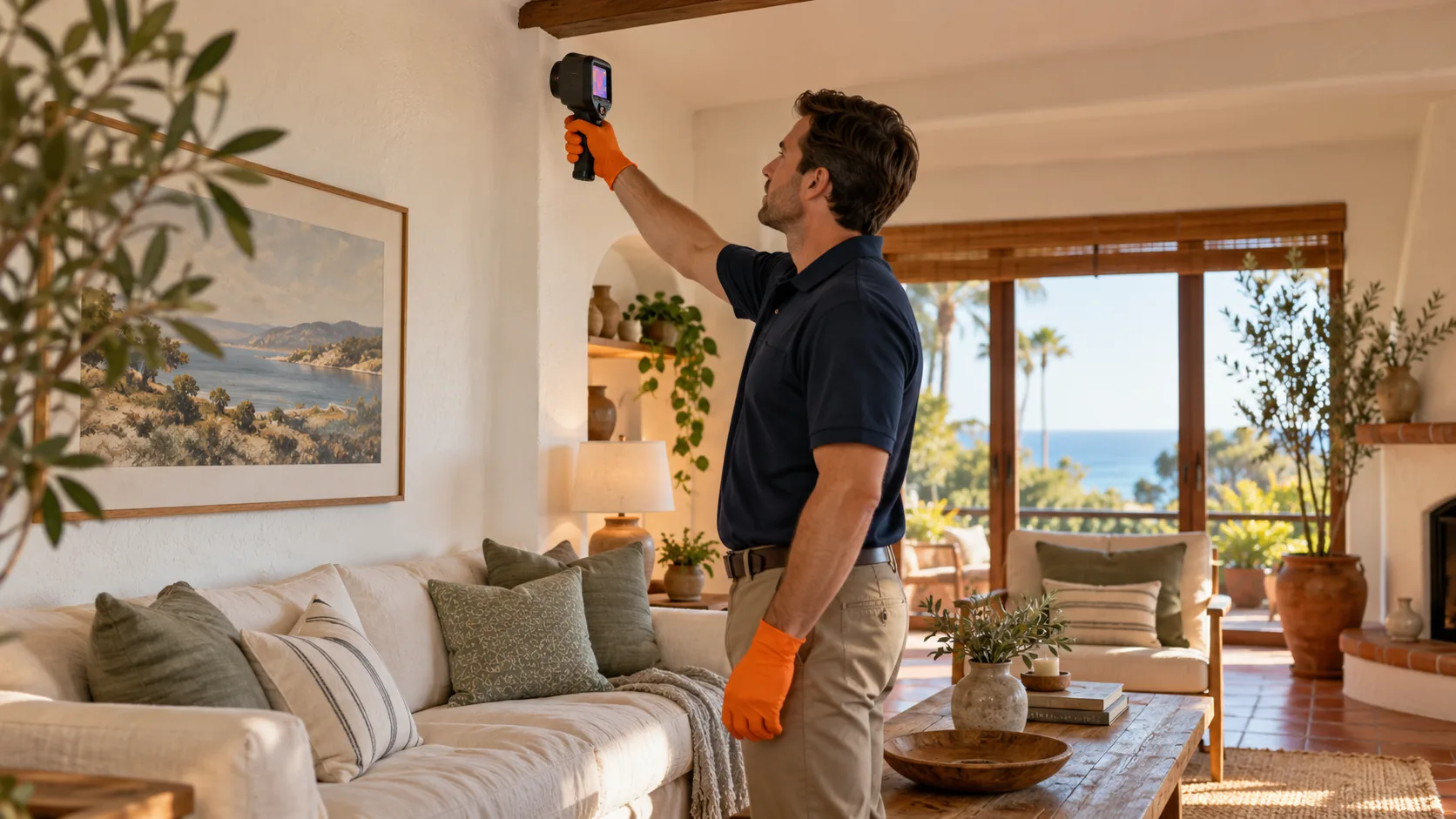
During the visit, our inspector evaluates the relevant areas and looks for conditions that may support mold growth. Moisture meters or thermal imaging may help identify areas for closer evaluation. When relevant, we also consider the HVAC system as part of the indoor-air picture. We then select air or surface sampling based on what we observe and the questions you brought to us. Samples are documented and sent to an independent laboratory for analysis.

Once the results are ready, we review them with you, explain what the lab identified, and discuss reasonable next steps. Each property and concern is different, so we tailor the assessment to the home. For concerns that extend beyond mold, our indoor air quality testing in Carpintería can assess additional environmental factors, including VOCs, formaldehyde, particulate matter, and humidity.

Inspector using a thermal imaging camera on a living room ceiling during a mold inspection

Independent Testing Keeps the Focus on the Findings

We test and assess; we don’t perform mold remediation. That separation keeps our role centered on investigating the concern, explaining the lab results, and helping you understand your options. If the findings point to work that needs attention, you can use the report to make an informed decision about what to do next.

You deserve to understand what was tested, what the results show, and what remains uncertain. We’ll walk you through the report and answer your questions in clear language, so you can decide whether to monitor conditions, investigate further, or speak with a remediation professional.

When Moisture Mapping May Be the Right Next Step

Mold testing evaluates samples; moisture mapping documents where moisture is present in building materials. If a leak was repaired but a wall still feels damp, or a stain keeps returning, moisture readings can help show where water has traveled and which areas may need further attention.

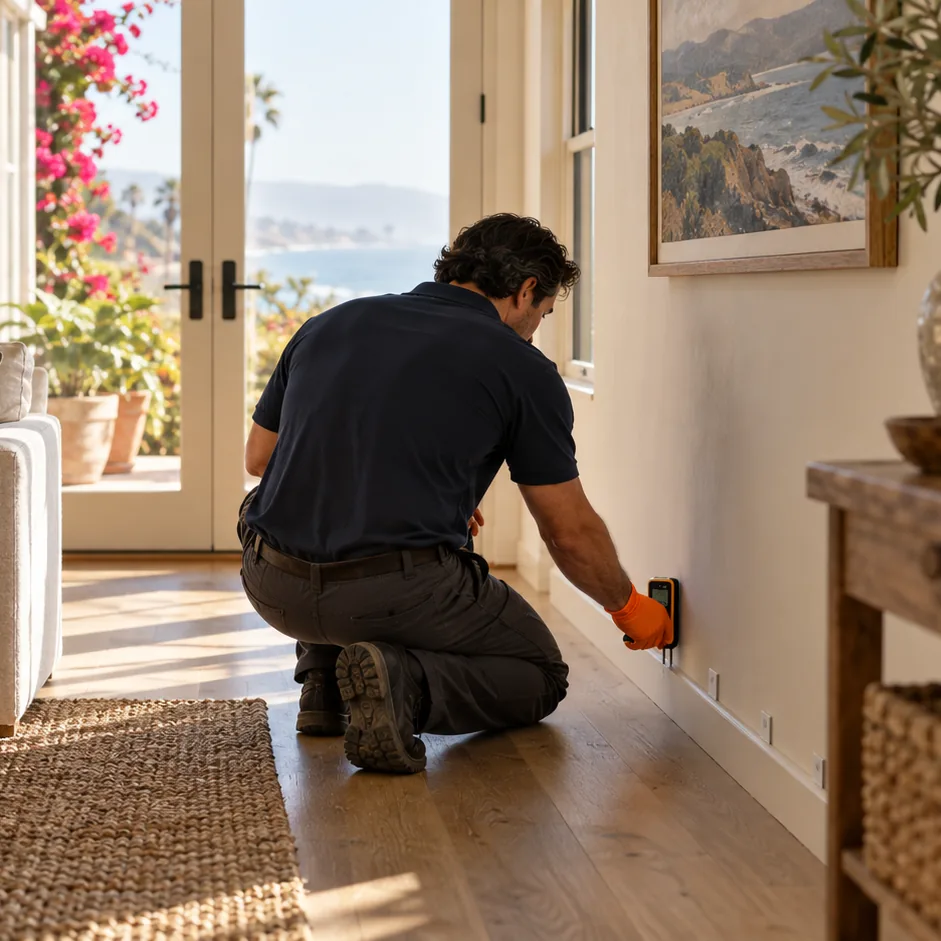
Our moisture-mapping visit uses non-invasive measurements to create a clearer record of moisture conditions in areas such as walls, ceilings, and floors. When your main question is where moisture remains, moisture mapping can help document damp areas and focus further investigation.

Inspector taking a moisture meter reading at the base of a wall

Had Mold Remediation Completed? Verify the Results

After remediation, independent post-remediation verification can help assess whether the work met the project’s clearance objectives. We inspect the defined work area and collect samples as appropriate, ideally while containment is still in place. The inspection and laboratory findings give you documentation to review before the project is closed out.

Verification is a separate service from an initial mold inspection. If cleanup is complete and you want an independent check before closing out the project, post-remediation verification is designed for that stage.

Talk With Us About What You’ve Noticed

Testing is an investment, so it’s reasonable to ask whether it will help you make a better decision. We’ll give you an honest recommendation and a clear price before you commit. If a simpler first step makes more sense, we’ll tell you.

The point is to leave you with useful information, not pressure. You’ll be able to decide what happens next with a better understanding of what your home’s findings show and what questions remain.

Talk with our team

Request an Estimate

FAQs: Mold Testing Carpintería

Our mold testing covers more than 90 mold types, including Stachybotrys, Chaetomium, Ulocladium, Cladosporium, Aspergillus, and Penicillium. The laboratory identifies types present in the samples collected, and we interpret those results alongside air-sample concentrations, inspection findings, and, where appropriate, an outdoor control sample. Your inspector can explain the results in context and answer your questions.

A mold inspection begins with a conversation about what you’ve noticed and any history of leaks or repairs. Our inspector evaluates the relevant areas, using moisture meters or thermal imaging when appropriate. We choose air or surface sampling based on the property and your concerns, send samples for lab analysis, then review the findings with you in clear language.

Yes. Mold testing can be useful even when you can’t see growth. During an inspection, we consider your concerns, the building’s history, and conditions that could support mold, then decide whether air or surface sampling is appropriate. Laboratory findings are interpreted alongside the inspection and, where applicable, an outdoor control sample.

We provide mold testing and assessment; we don’t perform mold remediation. Our role is to inspect, collect samples when appropriate, and explain the laboratory findings. If results indicate that further work may be warranted, we’ll discuss what they show and the next questions to take to a remediation professional as you consider your options.

Most home mold inspections take one to two hours, depending on the property size and number of samples. Standard laboratory results typically take five to seven business days. Express processing may be available when timing matters; we’ll confirm the current turnaround for your testing plan before you schedule and review the findings with you once results are ready.